Enrichment classes can help children develop new skills, build confidence, and discover their interests beyond academics. Explore the key benefits, potential drawbacks, and important factors to consider before deciding if enrichment classes are the right choice for your child.
Enrichment classes can help children develop new skills, build confidence, and discover their interests beyond academics. Explore the key benefits, potential drawbacks, and important factors to consider before deciding if enrichment classes are the right choice for your child.
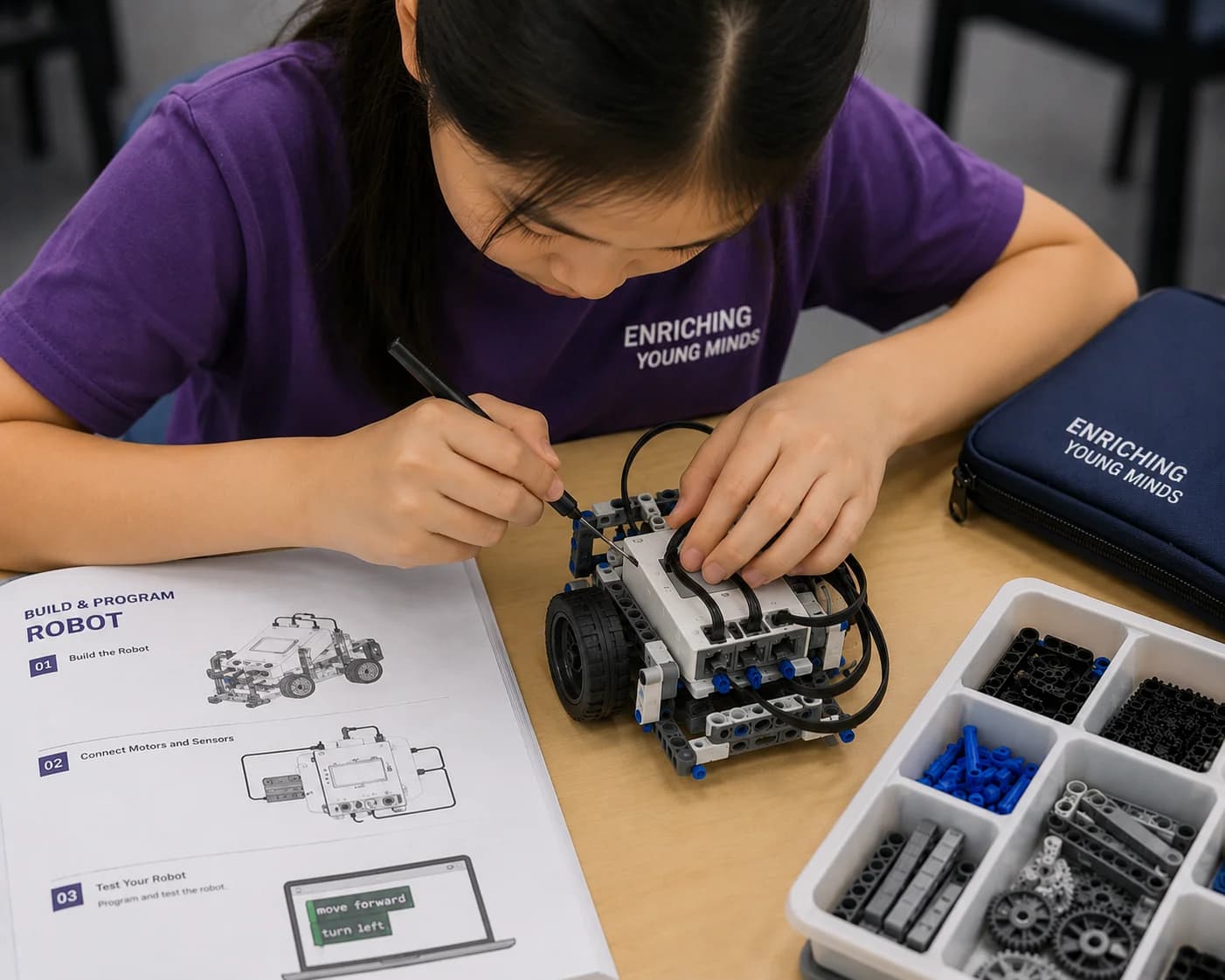
Enrichment classes have become a normal part of childhood in Singapore, from music lessons to robotics clubs. But with so much time and money involved, it's fair to ask whether they actually make a meaningful difference.
This guide looks at what research actually shows, along with where the benefits tend to be more real than others.
A number of studies have looked into how enrichment activities affect children's development.
A study by Carnegie Mellon University found that children who took part in structured summer enrichment programmes retained more academic knowledge afterward, suggesting these programmes help bridge gaps that might otherwise widen during breaks.
This points to enrichment being genuinely useful, particularly outside regular school terms.
Not all enrichment classes offer the same type or level of benefit.
A randomised controlled trial on young children found that consistent music practice over two years led to broad improvements in executive function, compared to children who received only occasional cultural exposure.
Not every enrichment class delivers equally strong results, and it helps to be realistic about this.
Area | What Research Supports | What to Keep in Mind |
|---|---|---|
Cognitive skills | Structured, consistent programmes show real gains | Occasional sessions show weaker effects |
Social skills | Group-based classes build teamwork and communication | Benefits depend on group dynamics |
Academic performance | Some indirect support through focus and retention | Not a guaranteed substitute for classroom learning |
Emotional development | Arts and sports support emotional regulation | Requires genuine engagement, not just attendance |
Factor | Why It Matters |
|---|---|
Consistency | Regular practice shows stronger results than occasional attendance |
Genuine interest | Engagement, not just attendance, drives real skill development |
Balanced schedule | Overloading reduces the benefit of any single activity |
Age-appropriate pacing | Matching format to developmental stage improves outcomes |
Long term view | Benefits often build gradually, not within a few sessions |
1. Are enrichment classes backed by real research, or mostly marketing?
Genuine research supports some benefits, particularly with consistent, engaged participation.
2. Do enrichment classes improve school grades directly?
Not always directly, though improved focus and skills can support learning indirectly.
3. Is more enrichment always better for a child?
No, too many classes can dilute the benefit of each one.
4. Which type of enrichment shows the strongest research support?
Music and structured cognitive programmes currently have some of the clearest evidence.
5. How long does it take to see real benefits from a class?
Meaningful gains often take months of consistent participation, not weeks.
Continue your deep dive with these related articles.

Travelling with young children is easier when you have the right equipment without the extra baggage. Discover how baby gear rentals can save space, reduce costs, and provide convenient access to essentials, making family holidays smoother and more enjoyable.

Looking for the best Chinese tuition centre in Singapore? Discover top-rated centres offering engaging lessons, experienced teachers, and proven programmes for preschool, primary, secondary, and Higher Chinese students. Compare teaching approaches and find the right fit to help your child build confidence and excel in Chinese.

Marine Parade offers a wide range of student care centres designed to support children beyond the classroom. Explore trusted options that provide homework supervision, enrichment programmes, and a safe, nurturing environment to help you find the best fit for your child's learning and development.

Looking for the best student care centre in Bukit Merah? Discover trusted centres offering quality academic support, enrichment programmes, and a safe after school environment. This guide compares the top student care options in Bukit Merah to help you choose the right fit for your child's learning and development.